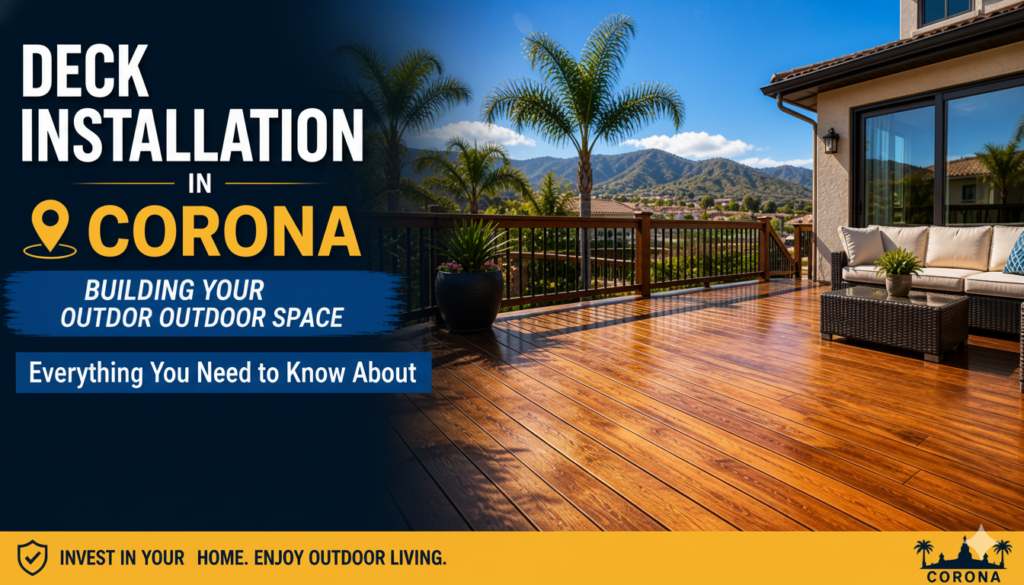
Few home improvement projects deliver as much impact on everyday living as the addition of a well-built deck. An outdoor deck expands usable living space, creates an environment for entertaining and relaxation, and adds lasting value to a property. In Corona, California where warm weather and outdoor living are central to the lifestyle Deck Installation Corona is one of the most rewarding investments a homeowner can make. Understanding how decks are planned, what materials are used, and how the installation process unfolds helps property owners approach this project with clarity and confidence.
What Is a Deck and What Can It Offer?
A deck is an elevated or grade-level platform structure attached to or positioned near a home, typically built from wood or composite materials. It serves as an extension of the indoor living space into the outdoors a place to dine, gather, relax, and enjoy the surrounding environment. Well-designed decks increase the functional square footage of a home without requiring the complexity or cost of a full interior addition.
Beyond practical benefits, a deck enhances curb appeal and property value. Research in the home improvement industry consistently shows that a quality deck delivers a meaningful return on investment. Buyers are attracted to homes with well-maintained outdoor living areas, and a deck signals that the property has been thoughtfully improved.
Types of Decks
Decks come in a range of styles, each suited to different property layouts and lifestyle needs.
- Attached Decks: These are connected directly to the exterior wall of the home via a ledger board, making them the most common residential configuration. They extend the living space outward from a door or sliding glass door, creating a seamless transition between indoors and outdoors.
- Freestanding Decks: Not connected to the home structure, these decks are self-supporting and can be positioned anywhere on the property. They are a useful option when attaching to the house is not structurally feasible or when the deck is intended for a specific garden or poolside location.
- Multi-Level Decks: These feature two or more platform levels connected by steps, allowing the deck to follow the natural contour of a sloped lot or to create distinct zones for dining, lounging, and entertaining.
- Wrap-Around Decks: These extend around multiple sides of a home, maximising outdoor access and views. They are well-suited to larger properties or homes where outdoor access from multiple rooms is desired.
- Rooftop or Upper-Level Decks: Built above the ground level, often above a garage or lower story, these decks maximise space on properties where yard area is limited.
Decking Materials
The choice of decking material is one of the most consequential decisions in the entire project. It affects the deck’s appearance, its durability, its maintenance requirements, and its long-term cost.
Pressure-Treated Lumber: The most widely used and cost-effective wood option, pressure-treated pine is chemically infused to resist rot, insects, and moisture. It is the standard material for the structural framing (posts, beams, and joists) of virtually all decks. For the deck surface itself, pressure-treated lumber offers a budget-friendly option, though it tends to warp and crack over time and requires regular maintenance including staining or sealing.
Cedar and Redwood: Natural softwoods with inherent resistance to insects and moisture, cedar and redwood are popular choices for deck boards. They offer a warm, natural appearance and are easier on bare feet than some hardwood alternatives. Regular staining or sealing is needed to maintain their colour and extend their life.
Tropical Hardwoods (such as Ipe, Cumaru, and Teak): These dense, naturally durable woods offer exceptional longevity and a rich, sophisticated appearance. Ipe, often called Brazilian Walnut, can last decades with proper care. The trade-off is a higher upfront material cost and the need for specialised tools during installation due to their hardness.
Composite Decking: Made from a blend of recycled wood fibres and synthetic polymers, composite decking has become one of the most popular choices for residential decks. It resists rot, insects, and fading, requires no staining or sealing, and comes in a wide range of colours and textures that mimic the look of natural wood. While the initial cost is higher than some wood options, composite decking saves money over time through reduced maintenance. Composite materials resist moisture better than wood and are particularly well-suited to the sunny, occasionally wet conditions in Corona.
PVC Decking: Entirely synthetic, PVC deck boards contain no wood fibres, making them completely impervious to moisture, mould, and insect damage. They require virtually no maintenance and are available in a variety of styles and colours.
Aluminium Decking: Exceptionally durable and fire-resistant, aluminium decks are virtually maintenance-free and do not warp, rot, or fade. They are particularly valued in regions prone to wildfire risk.
The Deck Installation Process
Building a deck follows a logical sequence that ensures structural integrity and code compliance at every stage.
Planning and Design: The homeowner works with the contractor to define the deck’s purpose, size, layout, and material preferences. The contractor then draws up plans and submits them to the local building department for permit approval. In Corona, deck installations require building permits, and construction must comply with local building codes governing structural loads, railing heights, and footing depths.
Site Preparation: Once permits are approved and the site is marked, the ground is prepared. For decks with underground post footings, holes are dug and concrete is poured to create the footings that anchor the structure.
Framing: The structural skeleton of the deck posts, beams, and joists is built first. The ledger board (for attached decks) is fastened to the home’s rim joist with appropriate hardware. Framing is the phase that determines the strength and longevity of the entire deck.
Decking Installation: Once the framing is complete and inspected, the deck boards are laid across the joists. Spacing between boards is maintained for drainage and expansion. Fasteners may be face-screwed for a traditional look or hidden for a clean, seamless surface.
Railings and Stairs: Railings are required by code when a deck surface is 30 inches or more above grade. Stairs are constructed with consistent riser heights and tread depths for safe, comfortable use.
Finishing: Depending on the material chosen, a final inspection is completed and the deck surface may be treated, stained, or sealed as a protective measure.
Conclusion
Deck installation in Corona is a highly rewarding project that, when planned and executed well, delivers years of enjoyment and lasting property value. From choosing the right style and material to understanding the construction process, an informed homeowner is well-positioned to achieve an outdoor space that genuinely enhances their way of living. The combination of Corona’s outdoor-friendly climate and the right deck design creates an ideal setting for everything from quiet morning coffee to lively family gatherings.