In the vast ecosystem of logistics and supply chain management, much attention is given to temperature-controlled environments like chilled and frozen storage. However, the vast majority of goods traded globally require neither refrigeration nor freezing. These products—ranging from canned foods and dry goods to construction materials, textiles, electronics, and pharmaceuticals stable at room temperature—rely on a different but equally critical solution: Dry Storage.
Dry storage refers to warehousing facilities that maintain natural, controlled indoor conditions that protect products from external elements. Unlike cold storage, dry storage facilities do not actively cool the space, but they provide essential protections: shelter from rain and direct sunlight, ventilation to prevent condensation, pest control measures, and structural integrity to prevent water ingress. Proper humidity control is crucial, as excessive moisture can damage packaging, promote mold growth, and compromise product quality.
For businesses seeking cost-effective, scalable protection for non-perishable inventory, professional dry storage offers the perfect balance of safety and affordability. Without proper dry storage, products face risks of mold, rust, pest infestation, and packaging degradation—all leading to financial loss and brand damage. The Saudi market has seen significant investment in this sector, with major logistics parks incorporating dry storage alongside chilled and frozen facilities to meet diverse business needs.
Dry Storage in Dammam
Dammam, the capital of Saudi Arabia’s Eastern Province and a major Gulf port city, presents a hybrid challenge for Dry Storage in Dammam. The city experiences both high summer temperatures that regularly exceed 45°C and periodic Gulf humidity, plus salt-laden air from the nearby sea that can accelerate corrosion on metal components. Dry storage facilities in Dammam must therefore address multiple threats: heat, moisture, salt, and sand.
Infrastructure Requirements in Dammam
Professional dry storage facilities in Dammam employ several key design features. Cool-roof technology with high-albedo coatings reflects solar radiation, reducing internal temperatures significantly. Insulated sandwich panels (minimum 80mm thickness) line external walls and roofs, slowing heat transfer and reducing temperature swings between day and night. Strategic ventilation with ridge vents and turbo extractors provides natural airflow without the energy costs of mechanical ventilation. Dust filtration on all intake points keeps products clean and free from particulate contamination.
Dammam’s Strategic Importance
Dammam’s strategic location makes it a vital logistics hub for the Eastern Province and a gateway to other GCC countries via the Gulf Bridge. The city is home to King Abdulaziz Port, one of the Kingdom’s largest and busiest ports, handling a significant portion of Saudi Arabia’s import and export traffic. The Eastern Province is also home to major industrial zones, including Dammam Third Industrial City, which hosts manufacturers of petrochemicals, plastics, building materials, and processed foods—all requiring dry storage for raw materials and finished goods.
Industries Served
For businesses operating in Dammam—from industrial parts suppliers and automotive distributors to food wholesalers and e-commerce fulfillment centers—professional dry storage provides secure, accessible, and cost-effective inventory protection. The region’s growing population of expatriate professionals and expanding industrial base drive consistent demand for quality storage solutions. Dry storage in Dammam must also accommodate the needs of the food and beverage sector, including suppliers of raw ingredients and supermarket chains requiring ambient storage for packaged goods.
Dry Storage in Jeddah
Jeddah, Saudi Arabia’s bustling port city on the Red Sea and the gateway to the Two Holy Mosques, presents a unique set of challenges for Dry Storage in Jeddah. Unlike the dry heat of Riyadh or the hybrid conditions of Dammam, Jeddah experiences high humidity year-round, with coastal fog and occasional rainfall. This moisture-rich air can cause cardboard packaging to weaken, metal components to rust, and labels to peel—all of which compromise product integrity and brand presentation.
The Humidity Challenge
Professional dry storage in Jeddah must prioritize moisture protection above all else. Facilities use vapor barriers in floors and walls to prevent ground moisture infiltration. Proper drainage around the building perimeter channels rainwater away from the structure. Strategic ventilation timing avoids peak humidity hours, while dehumidification systems actively reduce moisture levels in the air. Additionally, Jeddah’s salt-laden air accelerates corrosion on metal racking and building components, requiring marine-grade coatings or regular maintenance.
Major Infrastructure Developments
Jeddah’s importance as a logistics hub has been reinforced by major infrastructure investments. Construction is underway on the largest logistics park in Saudi Arabia, a $240 million collaboration between Mawani (Saudi Ports Authority) and DP World at Jeddah Islamic Port. This 415,000 square-meter integrated logistics park includes bonded and unbonded zones, with grade-A warehouse spaces offering dry, chilled, and cold storage facilities. The facility features 185,000 square meters of warehouse space and an expansive storage yard with capacity for 390,000 pallet positions. Sustainable infrastructure includes a rooftop solar plant that will generate 20 MW of renewable energy.
Market Demand
For businesses operating in Jeddah—from food importers and textile distributors to electronics retailers and construction material suppliers—choosing a dry storage provider with local expertise is essential. The city serves as the entry point for goods destined for Makkah, Madinah, and beyond. During peak seasons like Ramadan and Hajj, demand for dry storage spikes dramatically as businesses stockpile goods to serve millions of pilgrims and residents. Facilities offering flexible short-term contracts are particularly valued in this environment.
Units: Your Trusted Partner for Dry Storage Across Saudi Arabia
When your business demands dry storage that is secure, accessible, efficient, and tailored to Saudi conditions, one name consistently rises to the top: Units. As the Kingdom’s premier provider of storage solutions, Units has established itself as the top company for dry storage across Riyadh, Jeddah, Dammam, and beyond.
Engineered for Saudi Conditions
Unlike generic warehouse operators who simply rent empty space, Units designs its dry storage facilities from the ground up for Saudi Arabia’s unique environment. Their buildings feature cool-roof technology with high-albedo coatings that reflect up to 85% of solar radiation, reducing internal temperatures by 8–12°C compared to standard metal warehouses. Insulated sandwich panels with polyurethane cores (minimum 80mm thickness) line all external walls and roofs, slowing heat transfer. Strategic placement of ridge vents, turbo extractors, and louvered wall vents provides natural airflow without the energy costs of mechanical ventilation, while dust filters on all intake points keep your products clean.
Strategically Located Facilities
Location is everything in logistics, and Units has secured prime positions across the Kingdom:
- Dammam Facility: Strategically located in the Eastern Province, Units Dammam offers easy access to King Abdulaziz Port and the Gulf Bridge connecting to Bahrain, serving the region’s industrial heartland. The facility is positioned to support businesses in Dammam Third Industrial City and surrounding industrial zones.
- Jeddah Facility: Located near King Abdulaziz Port and the Haramain High-Speed Railway station, Units Jeddah is ideal for importers and distributors serving Makkah, Madinah, and the western region. The facility is designed with enhanced moisture protection to combat Red Sea humidity.
Professional Infrastructure and Technology
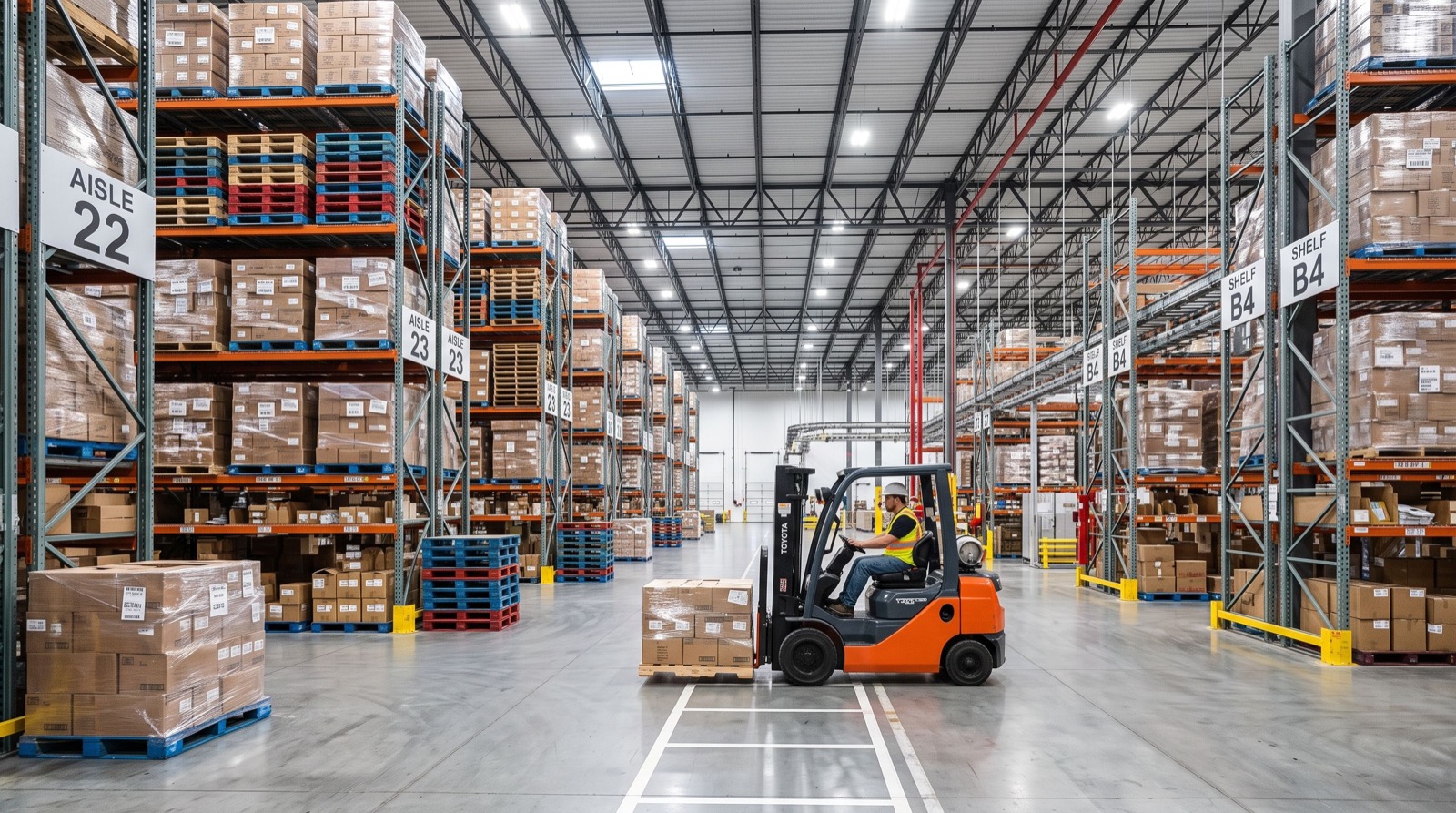
Inside their facilities, Units provides professional-grade infrastructure designed for operational efficiency. Heavy-duty pallet racking systems accommodate standard GCC pallets and custom sizes. Aisle widths of 3 to 4 meters allow easy maneuvering of forklifts. LED lighting with motion sensors reduces energy costs while providing excellent visibility. Fire safety systems include wet sprinklers, smoke detectors, and fire extinguishers at every aisle end, all maintained to civil defense standards. Security is comprehensive: 24/7 CCTV coverage, biometric access control, and perimeter fencing with intrusion detection.
Every Units client receives access to a cloud-based warehouse management system (WMS) for real-time inventory visibility, low-stock alerts, and pick-list generation. The system supports barcode scanning, RFID, and API integration with existing ERP software. Units offers flexible month-to-month contracts—whether you need 50 square meters or 20,000 square meters—and maintains SFDA certification for food-grade storage.
Don’t trust your non-perishable inventory to substandard facilities that expose products to extreme heat, humidity, or dust. Partner with Units—the name that businesses across Saudi Arabia trust for dry storage excellence. Visit their website at units.sa to schedule a facility tour, request a customized quote, or speak directly with one of their dry storage specialists.
Conclusion
Dry storage is the workhorse of the logistics industry, protecting the vast majority of goods that do not require temperature control. Dry Storage provides cost-effective, scalable protection for foods, textiles, electronics, and construction materials. In the Eastern Province, Dry Storage in Dammam must handle extreme heat, periodic humidity, and salt-laden air while serving the region’s industrial heartland. In the western region, Dry Storage in Jeddah requires enhanced moisture protection and marine-grade corrosion resistance to combat Red Sea humidity. Across both locations, Units stands as the top company, offering professionally managed, technologically advanced, and strategically located dry storage facilities. Do not trust your non-perishable inventory to substandard warehousing. Visit units.sa today and secure the dry storage solution your business deserves.
Frequently Asked Questions (FAQs)
1. What products are suitable for dry storage?
Dry storage is ideal for canned and jarred foods, dry goods (rice, flour, sugar, pasta), bottled beverages, paper products, cleaning supplies, textiles and clothing, hardware and tools, automotive parts, furniture, construction materials, and electronics. Units provides dry, ambient, chilled, and frozen storage options to accommodate diverse product requirements.
2. How does Units protect products from Jeddah’s high humidity?
Units’ Jeddah facility incorporates vapor barriers in floors and walls, proper building drainage, strategic ventilation timing to avoid peak humidity hours, and dust filters on air intakes. Marine-grade corrosion-resistant materials protect metal components from salt-laden air, and humidity is continuously monitored to ensure optimal conditions.
3. Does Units offer dry storage for short-term seasonal needs?
Absolutely. Units understands that many businesses experience seasonal fluctuations—before Ramadan, during Hajj, or ahead of major sales events—and offers flexible month-to-month contracts with no long-term commitment. You can scale space up or down with 30 days’ notice, paying only for the space you actually use.
4. How do I access my products stored at Units?
Units provides scheduled access during operating hours (Saturday through Thursday, 7 AM to 5 PM), with after-hours access available by prior arrangement. You can request that Units’ team pick specific items using their WMS portal, or send your own staff with authorized identification to access your dedicated storage area under supervision.
5. Does Units provide inventory management software with dry storage?
Yes. Every dry storage client receives access to Units’ cloud-based warehouse management system (WMS), allowing real-time viewing of inventory levels, product locations, low-stock alerts, and pick-list generation. The system supports barcode scanning, RFID, and API integration with your existing ERP or accounting software, giving you complete visibility and control over your inventory from anywhere.